
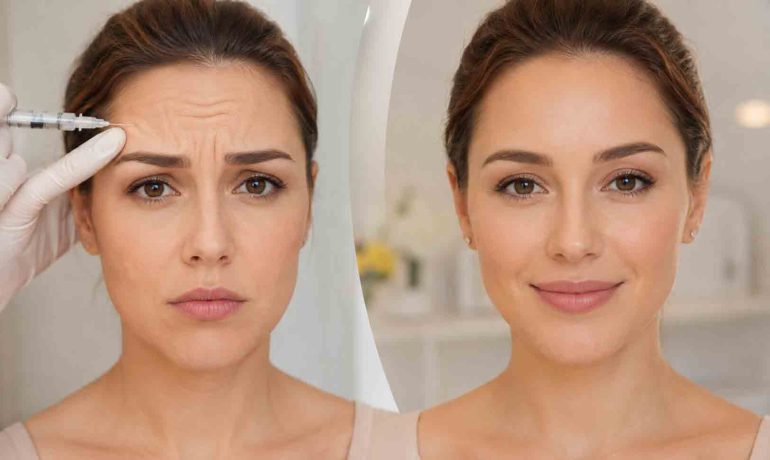
This guide provides a complete, realistic overview of Botox before and after results. It explains the gradual onset of effects, the typical day-by-day timeline from injection to full results, and what changes are actually visible in different treatment areas. The article covers forehead lines, frown lines, crow’s feet, and advanced applications like the lip flip and chin smoothing. It also addresses how results vary by age, how long they last, and what maintenance looks like. Finally, it explores content gaps left by competitors, including long-term skin effects, business considerations for clinics, and the importance of provider expertise in achieving natural-looking outcomes. Fantazia offers professional Botox treatments tailored to your individual needs, delivering natural-looking results that enhance your features.
Introduction
Searching for Botox before and after photos is often the first step in deciding whether this treatment is right for you. But what do these images actually show, and what can you realistically expect from your own results? The truth is that Botox produces subtle, natural-looking improvements rather than dramatic transformations. The goal is a smoother, more rested appearance that still allows your face to move and express emotion naturally.
This guide walks you through every aspect of the Botox journey, from the initial consultation to the final results and beyond. Whether you are considering treatment for the first time or looking to understand how to maintain your results, this article provides the clinically grounded, practical information you need. Fantazia is committed to helping you achieve natural-looking results that enhance your unique beauty.
What Botox Before and After Results Actually Look Like
When people search for Botox before and after photos, they typically want a clear answer: how much of a difference does it really make? For most patients, the change is noticeable yet natural. The best Botox results are often the ones where people notice you look fresher and more rested but cannot immediately point to why. This is the hallmark of skilled, conservative treatment. The face still moves, but expressions look less etched in and more relaxed.
Softening, Not Transformation
Botox works by temporarily relaxing the muscles that cause dynamic wrinkles the lines that form when you smile, frown, or squint. It does not reshape your face, add volume, or erase deep static lines that are visible even when your face is at rest. Instead, Botox before and after photos typically show a softening of movement lines. The forehead appears smoother, frown lines become less prominent, and crow’s feet are less sharply etched. The outcome is refinement, not a completely different face.
What Good Botox Looks Like
Good Botox should not look obvious. The face should still move, and the result should match the person’s features rather than flatten them. The best before and after photos show improvement without erasing individuality. A frozen or overly smooth appearance is usually a sign of excessive dosing or incorrect injection technique. Skilled providers aim for what is often called invisible aesthetics, where the patient looks well, not treated.
The Botox Results Timeline: What Happens Day by Day
Understanding the Botox timeline is essential for setting realistic expectations. Results are not immediate, and judging the outcome too early is one of the most common mistakes patients make.
Day 0: Immediately After Treatment
Right after the injections, you may notice small bumps, mild redness, or pinpoint bleeding at the injection sites. These typically fade within an hour or two. There is no immediate visible change in your wrinkles because the toxin needs time to bind to nerve endings.
Days 1 to 3: Little Visible Change
During the first few days, your face looks essentially the same as before treatment. Some patients report a mild sensation of tightness as the Botox begins to interact with the muscles, but visible softening has not yet begun.
Days 3 to 7: First Signs of Softening
Most patients begin to notice the first visible changes between days three and five. Thinner-muscle areas like crow’s feet or the area between the brows often respond first. Movement starts to reduce, and lines begin to look less pronounced during expression.
Days 10 to 14: Full Results Visible
The full effect typically develops around the two-week mark. This is when before and after photos are most useful for comparison. At this point, the treatment has fully settled, and you can see the complete smoothing effect. Most clinics schedule follow-up appointments around this time to assess results and determine if any minor touch-ups are needed.
Weeks 3 to 8: Stable Results
Once full results are achieved, they remain stable for several weeks. This is often when people comment that you look refreshed without being able to pinpoint exactly why.
Months 3 to 4: Gradual Return of Movement
Results typically last three to four months, with normal variation by patient, dose, and muscle strength. Movement gradually returns, with lines reappearing first during strong expressions and then at rest. This gradual fade signals that it is time for a maintenance treatment.
Botox Before and After by Treatment Area
Different areas of the face respond to Botox in distinct ways. Understanding what changes to expect in each area helps you set realistic goals for your treatment.
Forehead Lines
Forehead Botox before and after photos typically show the clearest contrast. Horizontal forehead lines are created by the frontalis muscle, which pulls the skin upward when you raise your eyebrows. After treatment, the skin in this area appears smoother and more relaxed. The best results do not erase every line a little movement is usually what keeps the outcome looking believable. However, the forehead requires careful dosing because treating it without considering the brow position can lead to a heavy or drooping appearance.
Frown Lines (Glabellar Lines or “Elevens”)
The vertical lines between the eyebrows, often called the elevens, are one of the areas where patients notice the biggest visual difference. These lines can make someone look tense, tired, or stern even when they are not. After Botox, this area looks softer and less heavy, which can have a surprisingly big effect on the overall face because it changes the expression people read first.
Crow’s Feet
Crow’s feet, the lines that fan out from the corners of the eyes when smiling or squinting, often respond very well to Botox. After treatment, these lines become less prominent and less sharply etched. This area is a good example of why subtle Botox works well. The eyes can still look expressive, but the skin around them tends to appear smoother and less crinkled.
Lip Flip
The lip flip is an advanced application where small amounts of Botox are injected into the upper lip to relax the muscles that cause the lip to curl inward when smiling. The result is a subtle lift that makes the upper lip appear fuller and more visible without adding volume. Results typically last six to eight weeks, or up to three months in some patients. The full effect is usually visible within one to two weeks.
Chin (Mentalis Muscle)
Some patients develop dimpling or an orange peel texture in the chin when speaking or resting. This is caused by overactivity of the mentalis muscle. Botox can relax this muscle, smoothing the chin texture and improving lower face harmony. A single session into the mentalis muscle can improve chin aesthetics in appropriate candidates.
How Age Affects Botox Before and After Results
The goals and outcomes of Botox treatment evolve across different decades of life. Understanding how age influences results helps patients set appropriate expectations.
In Your 20s: Prevention
For patients in their twenties, Botox is often used preventatively. The goal is to slow the formation of deep static lines by reducing repetitive muscle movement before permanent creases develop. Results at this stage are typically very subtle, as there are few existing lines to correct. The focus is on maintaining smooth skin rather than reversing visible aging.
In Your 30s: Maintenance
During the thirties, fine lines become more noticeable, particularly in high-movement areas like the forehead and around the eyes. Botox at this stage is about maintaining a youthful appearance and delaying the onset of deeper wrinkles. Many patients in this age group begin regular treatment schedules to keep their skin looking smooth and refreshed.
In Your 40s: Refinement
The forties are often when preventive treatment transitions into corrective treatment. Lines that were once only visible during expression may now be present at rest. Botox can soften these lines significantly, but deeper static wrinkles may require additional treatments such as dermal fillers or laser resurfacing for optimal results.
In Your 50s and Beyond: Gentle Rejuvenation
For patients in their fifties and older, Botox provides gentle rejuvenation. The goal is to soften expression lines and create a more rested appearance without looking overdone. At this stage, Botox is often combined with other treatments to address volume loss and skin laxity for comprehensive facial rejuvenation.
How Long Do Botox Results Last?
For most patients, Botox results last three to four months. Some patients may notice longevity up to five months, especially with regular treatments. The duration varies based on individual factors including muscle strength, metabolism, dose, and treatment area. Smaller, more mobile muscles like those around the lips may metabolize Botox faster, resulting in shorter-lasting effects.
Maintenance and Long-Term Considerations
Consistent, long-term Botox use can have cumulative benefits. Patients who receive regular treatments often find that their lines become less deeply etched over time because the muscles have been trained to contract less frequently. This means that with ongoing maintenance, some patients may eventually need lower doses or less frequent treatments to maintain their desired results.
Most patients schedule maintenance appointments every 12 to 16 weeks. Regular touch-ups help maintain a consistent, refreshed appearance and prevent the deep lines from re-establishing themselves.
What Botox Cannot Do
Understanding the limitations of Botox is just as important as understanding its benefits. Botox is not a cure-all for every type of wrinkle or skin concern.
Botox Does Not Erase Deep Static Lines
Any line that is present at rest whether it is an etched-in frown line or a deep wrinkle is not going to disappear completely with Botox alone. These lines may soften, but they typically require additional treatments such as dermal fillers to fill volume loss, laser resurfacing to improve skin texture, or a consistent skincare regimen to support skin health.
Botox Does Not Add Volume
Botox relaxes muscles; it does not add volume to the face. If you have lost facial fullness due to aging, Botox alone will not restore that volume. Dermal fillers are often used in combination with Botox to address both muscle movement and volume loss for comprehensive rejuvenation.
Botox Does Not Improve Skin Quality
Botox does not rebuild collagen, improve skin elasticity, or address skin texture issues like sun damage or enlarged pores. These concerns require separate treatments such as chemical peels, microneedling, or laser therapy.
The Business Perspective for Clinics
While many guides focus on the patient experience, few address the business implications for aesthetic clinics. For practices like Fantazia, understanding how to effectively present before and after content is crucial for attracting high-intent patients. Treatment-specific landing pages with professional before and after photography convert significantly better than generic service pages.
The Importance of Standardized Photography
Many online galleries rely on inconsistent photography with varied lighting and expressions, which can exaggerate or misrepresent change. Competitors rarely discuss the importance of standardized documentation. Using consistent lighting, angles, and expressions allows patients to see genuine, comparable improvement rather than photographic artifacts. Clinics that invest in professional, standardized before and after photography build greater trust with potential patients.
Long-Term Skin Effects
The long-term benefits of consistent Botox use are often mentioned only briefly. Regular treatments can lead to fewer dynamic lines and less deeply etched wrinkles over time, particularly in high-movement areas. This cumulative effect means that patients who start treatment earlier and maintain it consistently may need less intervention as they age.
The Role of Provider Expertise
While many articles mention that results depend on the injector, few explain why. The forehead is one of the most difficult areas to treat due to the need to strategically place Botox without causing asymmetry in the eyebrows. Similarly, treating the lip flip requires precision to avoid affecting smile dynamics. Provider experience matters enormously in achieving natural-looking results. Fantazia’s experienced team focuses on delivering natural-looking results that enhance your features without compromising your expressions.
Combined Treatment Strategies
Most guides focus on Botox in isolation. However, many patients achieve their best results when Botox is combined with other treatments. Deep, etched-in lines may benefit from adjunctive treatments such as dermal fillers, laser resurfacing, or a consistent skincare regimen. Comprehensive facial rejuvenation often requires addressing both muscle movement and volume loss.
The Business Case for Botox Treatment at Fantazia
For aesthetic clinics, Botox represents a cornerstone service that drives patient volume and loyalty. At Fantazia, Botox is offered as part of a comprehensive suite of non-surgical aesthetic treatments. Botox works by temporarily blocking nerve signals to facial muscles, preventing them from contracting and reducing the appearance of dynamic wrinkles formed by repeated facial movements over time. This muscle relaxation is the foundation of the treatment’s effectiveness.
Botox has been extensively studied and used for cosmetic purposes for decades, making it the most well-known neurotoxin treatment available. For clinics, offering Botox provides an entry point for patients who may later explore other treatments such as dermal fillers, skin tightening, or laser therapies. The predictable results and high patient satisfaction rates make Botox a reliable treatment option and a powerful tool for building long-term patient relationships.
Frequently Asked Questions
How soon will I see results from Botox?
Botox results are not immediate. Most patients begin to notice initial softening within 3 to 5 days, with the full effect developing around 10 to 14 days after treatment. The two-week mark is when before and after photos are most useful for accurate comparison.
How long do Botox results last?
Results typically last 3 to 4 months, with individual variation based on factors like muscle strength, metabolism, dose, and treatment area. Some patients may notice results lasting up to 5 months, especially with regular treatments.
Will Botox make me look frozen or unnatural?
Not when administered correctly by a skilled provider. The goal of good Botox is a natural, subtle improvement that preserves your ability to express emotion. A frozen appearance is usually a sign of excessive dosing or poor injection technique.
Can Botox erase deep wrinkles completely?
Botox is most effective on dynamic wrinkles the lines that form when you move your face. It softens deep static lines but does not erase them completely. Lines already present when your face is relaxed may require additional treatments such as dermal fillers.
What areas can Botox treat?
The most common treatment areas are forehead lines, frown lines between the eyebrows (glabellar lines or elevens), and crow’s feet around the eyes. Advanced applications include the lip flip, chin smoothing, and jawline slimming.
Is Botox safe?
Botox has been extensively studied and used for cosmetic purposes for decades, making it the most well-known and well-researched neurotoxin treatment. Common side effects are mild and temporary, including slight swelling, redness, and minor bruising at injection sites. Serious complications are rare and usually linked to unqualified providers.
How much does Botox cost?
Botox is typically priced per unit, and the number of units needed varies based on the treatment area, muscle strength, and aesthetic goals. Actual dosing is individualized based on a thorough assessment.
Can I combine Botox with other treatments?
Yes. Many patients achieve their best results when Botox is combined with other treatments. Deep static lines may benefit from dermal fillers, laser resurfacing, or a consistent skincare regimen.
What should I avoid after Botox?
For the first 2 to 3 hours after treatment, avoid rubbing the treated area and refrain from lying flat. Avoid strenuous exercise, excessive heat, and alcohol for 24 to 48 hours post-treatment.
When should I start Botox?
The right age to start Botox varies by individual. Some patients begin in their twenties for prevention, while others start in their thirties or forties for maintenance and correction. A consultation with a qualified provider can help determine the best timing.
Conclusion
Botox before and after results represent a journey of gradual, natural-looking improvement rather than an instant transformation. Understanding the timeline, the realistic outcomes for different treatment areas, and the limitations of the treatment helps patients make informed decisions and feel confident in their choices. The best results come from skilled providers who prioritize subtle, natural-looking outcomes that preserve your unique expressions. Whether you are considering Botox for the first time or looking to optimize your maintenance schedule, the key to satisfaction lies in realistic expectations, consistent care, and choosing an experienced injector who understands your aesthetic goals.
Ready to Explore Botox Treatment at Fantazia?
Understanding what Botox can do for you is the first step toward achieving a refreshed, more rested appearance. At Fantazia, we offer professional Botox treatments tailored to your individual needs and aesthetic goals. Our experienced team focuses on delivering natural-looking results that enhance your features without compromising your expressions.
Whether you are interested in smoothing forehead lines, softening frown lines, or exploring advanced applications like the lip flip, we are here to guide you through every step of the process. Schedule a consultation today to discuss your goals and discover how Botox can help you look and feel your best.
Visit Fantazia to learn more about our comprehensive range of aesthetic services and take the first step toward a more confident you.
